
Open Dialogue Foundation Training 2027
for mental health professionals/teams, independent practitioners and peer workers
Online - commencing in February 2027
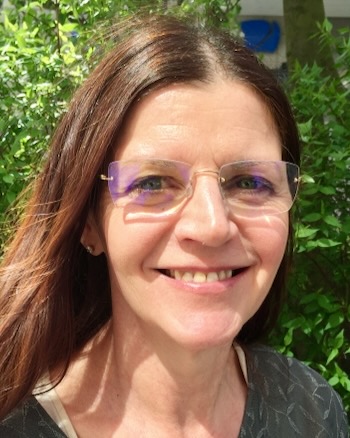
Petra Hohn
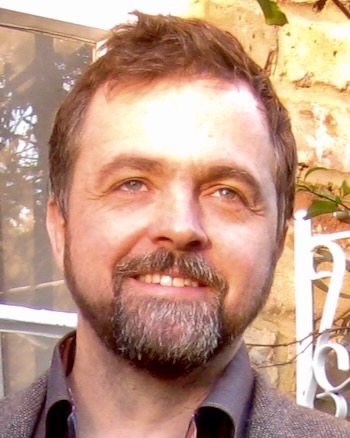
Nick Putman
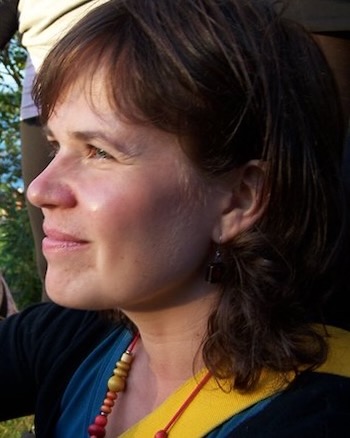
Anni Haase
About the training
This foundation training is an internationally recognised programme for professionals working in public mental health services (including peer workers) and independent practitioners. It is the most widely used Open Dialogue training programme internationally, and has now been run by Open Dialogue UK on 17 occasions, in five different countries, including five times on an in-house basis in the NHS in the UK. Many of the materials in the training are based on those originally developed by Volkmar Aderhold and Petra Hohn, who began running Open Dialogue foundation trainings over 15 years ago, continually revising their materials based on what proved to be most effective in training professionals in public mental health care services across Germany and Switzerland. This programme was also one of the two main trainings used in the Parachute Project in New York.
The programme provides a thorough grounding in the practice of facilitating Open Dialogue network meetings, and participants are encouraged to start practicing before the end of the training, if they are able to (though such practice is not a required part of Open Dialogue training at foundation level). The emphasis in the training is on practice, and understanding the approach through engaging both personally and professionally in the training process. In other words, though a good deal of theory and specific skills are taught on the programme, the heart of the process is the dialogue between the participants (and trainers) and the ways in which they reflect on the approach and each other’s contributions. Open Dialogue is an embodied practice and so it is important for participants to engage emotionally as well as intellectually in the training process
Training days typically consist of a mixture of exercises, role plays, presentations, handouts and discussions, and there is also a family of origin process, where participants explore their own family background. Reading is given after each block, rather than in advance, as practice comes before theory. The reading given will tend to follow the particular topics introduced on each block, and largely comes in the form of journal articles, which can be accessed online in PDF form, via the Open Dialogue international website. Because most of the theory is shared in the form of handouts and presentations during the training, and explored through dialogue in small and large groups, participants can access the theory that they need in order to practice through these means. You can find more detail on the content of the training below, and in the following video participants from our first foundation training reflect on their experience of being on the programme.
In mid 2020, due to the pandemic, we had to move our training programmes online, in order to maintain the training processes that were already underway. Initially there was some hesitancy in doing so, but we were very pleased to see how well the training worked online, with only minor adaptations needed for the online format. So we have decided to run the training online annually since 2021, and have continued to have a positive experience of doing so. We use Zoom as the software for our online trainings. Anni Haase, from the service in Western Lapland, Petra Hohn from Stockholm and Nick Putman, from the UK, will be the trainers on this programme (you can find further details about these trainers below). We are very pleased to have such an experienced training team for the programme.
If you are interested in participating in this programme please submit your application by 15 November 2026.
Dates
20 days of training are organised in 9 blocks of 2 or 3 days, as follows:
11-12 February
11-12 March
8-9 April
6-7 May
2-4 June
30 June – 2 July
16-17 September
28-29 October
25-26 November
All training days start at 9.00 and finish at 17.00 UK time (GMT/BST).
Training Fee
£3,150 (including VAT)
or 4 instalments of £875 (including VAT)
A 10% deposit secures your place on the training, following the offer of a place, and the balance or first instalment is due one month before the training.
Testimonials on
this training
 The programme will stretch you and encourage you to change how you communicate with others as well as yourself. I would thoroughly recommend it to anyone with any interest in the care of others.
Rex Barker, Former CEO of NHS Trust
The course has profoundly influenced my way of being with people in the world and my practice as a family therapist. I highly recommend it as a unique and deeply moving learning experience.
Jane Wilson, Systemic Psychotherapist, SLAM
The trainers, through their knowledge, experience and thorough modelling of a dialogical approach, were outstanding. This training contributed to reflection on my own practice and communication.
Claire Moffat, Consultant Psychiatrist, NHS
I cannot speak highly enough of the Foundation Training provided by Nick and the team of trainers. It was engaging, challenging and inspiring on so many levels – personally and professionally.
Cherie McGregor, Lived Experience practitioner
The training was a great experience – the structure, presentations, and role-play exercises, perfect! We were from very different backgrounds, and in spite of that, we bonded at a very deep level.
Claudia Esteve, Founder and Director, JAEC Foundation
Enquiries
If you have any queries about this training programme, or need to get in touch with us for any reason, please use our contact form here.
TRAINER BIOGRAPHIES
Petra Hohn is a registered nurse and network therapist, and has a masters for teaching in health services. She has been working since 1993 in different psychiatric services for outpatient and inpatient care, first at Kriscenter Soteria (1993-1997), an integrated model of care for people experiencing first break psychosis. From 1997 to 2001 Petra worked as the head of outpatient centres, first in Södertälje Psychiatric Sector with integrated Newly Identified Psychosis teams and integrated teams for social work and psychiatric treatment according to need adapted principles. Petra is presently working at Psychiatry South Stockholm as the head of an outpatient unit, and is also running training programmes for the organisation’s employees. She has been developing and running Open Dialogue training programmes since 2008, including for the Parachute Project in New York City. Petra has been part of the training team on more than 25 Open Dialogue UK foundation training programmes run in the UK, internationally and online.
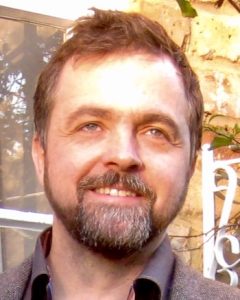
Nick Putman is a registered psychotherapist and a certified Open Dialogue practitioner and trainer, having completed a two year training in the Open Dialogue approach with Mary Olson and others in the US and a three year trainer’s training programme in London with Jaakko Seikkula and others. He is the founder of Open Dialogue UK, which established the first full training in the Open Dialogue approach outside of Western Lapland. Nick has visited the Open Dialogue service in Western Lapland on a number of occasions to study the approach and the structure of the service. He has more than 25 years experience working in a variety of mental health settings, and considerable experience working with people experiencing psychosis and their families. Nick has been a trainer on either full or foundation level Open Dialogue trainings run in the UK, Australia, France, Estonia and Belgium.
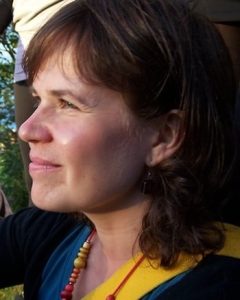
Anni Haase is a psychologist, psychotherapist and Open Dialogue practitioner and trainer. Currently she works at Keropudas outpatient services in Western Lapland, Finland, where Open Dialogue in psychiatry was born. Anni works with families and social networks but also practices individual psychotherapy in the spirit of a need adapted approach. She is also leading a training for peer workers and participates in a supervision group for peer workers. Anni gives individual supervision to workers at Keropudas Hospital. Previously Anni worked as an occupational psychologist in Rovaniemi and Tornio (2000-2004). Before Keropudas she worked as a psychologist in a family counselling centre in Tornio (2004-2010), which was strongly influenced by Open Dialogue training in the region. Anni has completed psychology teacher’s pedagogical studies (2005), and has specialised in family counselling (2007) and sensorimotor trauma therapy (2010). Anni has participated as a trainer in several trainings internationally including trainings run in Australia, the UK, Belgium, Spain and the US.
TRAINING CONTENT
The content of the training programme is described below. The topics are not arranged according to blocks, but rather are presented in chronological order. The amount of time spent on some topics and the order of topics can vary, based on the particular needs of participants and the service(s) they work in. Additional content to that listed below can also be added if needed for a particular group/training.
1. Getting to know one another – the group start to get to know one another through various exercises.
2. Western Lapland service and 7 principles of Open Dialogue – the history of the development of the Western Lapland mental health service is introduced, along with the current structure of the service, including the use of the 7 principles of Open Dialogue.
3. The evolution of systemic theory and practice, the work of Tom Andersen, the practice of reflecting and social network maps – Through presentations, exercises and small group discussions, participants learn about the shift from first order to second order cybernetics, and the work of Tom Andersen and his team in Tromsø, who developed the practice of using a reflecting team. Through various exercises participants learn about different styles of reflecting and the differences between the practice in the Western Lapland service and other related approaches/services. Participants are helped to think about the difference between systems and networks and have the opportunity to create their own social network map. They are also encouraged to pay careful attention to language and the way in which this can impact on others.
4. 12 elements of dialogic practice and network meetings – Through presentations and various exercises participants learn about the 12 elements of dialogic practice, which are the essential building blocks of becoming an Open Dialogue practitioner. They also learn about the structure of network meetings. The 12 elements of dialogic practice are as follows:
1. Two (or more) practitioners in network meetings
2. Participation of family and network
3. Using open-ended questions
4. Responding to clients’ utterances
5. Emphasising the present moment
6. Eliciting multiple viewpoints
7. Use of a relational focus in the dialogue
8. Responding to problem discourse or behaviour as meaningful
9. Emphasising the clients’ own words and stories, not symptoms
10. Conversation between practitioners in network meetings
11. Being transparent
12. Tolerating uncertainty
5. Role-play of network meetings – Having done various preparatory exercises, participants are ready to role-play a full network meeting of up to 90 minutes, with the support of the trainers present. Having had the opportunity to do so, they are then encouraged to start to practice in their day-to-day work in their services. Time is given to address/discuss fears around facilitating network meetings.
6. Service development and opportunities for network meetings – As well as learning to practice it is important to also address issues related to service development and the opportunities to use network meetings, and so time is taken to do so on the training programme.
7. Developing dialogic skills – Having learned the basic structure of network meetings and the practice of reflecting, various additional skills/forms of response are introduced through preparatory exercises and further role-plays, including circular questioning and meta-communication.
8. ‘Exploring your relational world’ process and family secrets – In the family of origin process, which lasts three days, each participant has the opportunity to explore their own relational world in small groups, with a trainer present to facilitate the process. Preparatory work is done for these days in advance. In dialogic practice we bring ourselves into our work more than in many other approaches, and therefore it is important to develop our understanding of ourselves in our own relational/familial context. This process is another opportunity to develop the practice of reflecting. Following the ‘exploring your relational world’ process a day is spent exploring the topic of family secrets.
9. Anticipation questions – A related dialogic approach developed in Finland which can complement the Open Dialogue approach in a variety of ways. The approach is introduced through a presentation and exercises.
10. Working with the meaning and context of behaviour and with ‘negative’ feelings towards network members – through handouts, dialogue and different exercises participants learn about the philosophy and use of positive connotation. They also learn how to work with ‘negative’ feelings that might develop towards network members and how an appreciation of positive/logical connotation can help with this.
11. Facilitating challenging network meetings and working with crisis, risk and people having psychotic experiences – As participants gain confidence in facilitating network meetings, they are able to engage in more challenging exercises and role-plays, focused on particular issues, including working with people in crisis and people having psychotic experiences. Issues relating to risk are addressed. Attention is also given to issues related to network members’ fears of participating in meetings with their network. Through such exercises and role-plays participants develop their appreciation of the ways in which the issues network members are facing (the issues that bring them into contact with mental health services) are usually rooted in the historical lived experience of the network and often in traumatic experiences.
12. Service development considerations and the use of training materials with colleagues – In the final block matters relating to service development are once again considered, as well as ways of engaging colleagues who are not trained in the practice (until such a time that they can also be trained).
13. Recap and final processes – A recap of the whole training process in order to consolidate on the learning that has taken place is followed by various closing process in which participants can consider the impact that the training process/experience has had on them.
AVAILABLE RESOURCES
All materials for the training are provided in either PDF or printed form. The essential theory and practical information related to the approach and the practice of Open Dialogue is provided during training days, in a condensed and accessible form. This is supplemented by reading articles which can be accessed/downloaded via an online forum. The forum also serves as a communication tool with and between participants during the course of the training.
TRAINING REQUIREMENTS
The main requirement for the training is participation! It is necessary to participate in at least 80% of the training in order to get a certificate of completion.
Beyond this there is some required reading between blocks. We aim to make reading articles accessible and any questions about the reading can be brought to training days. Those who want to dive deeper can also read additional recommended articles and books.
Prior to the block in which the ‘exploring your relational world’ process takes place, there is some preparatory work to do at home. Further details of this will be shared during the course of the training.